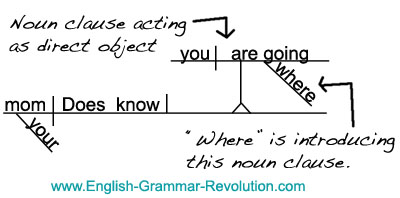
Examples Of Noun Clause : Write A Complex Sentence Containing A Noun Clause Used As A Direct Object. Noun clauses will contain a subject and a verb, but they cannot stand alone in a sentence. A noun serves as the subject of the verb in a sentence or it serves as the complement of the verb in a sentence ; The bag that someone left on the bus belongs to mrs. Like a noun or a noun phrase, a noun clause also works as the subject of a sentence. A noun clause is a clause (containing a subject and a verb) that can replace a noun.
A noun clause is a clause that plays the role of a noun in a sentence. A noun clause functions as a noun in a sentence. A noun clause is a dependent clause that acts as a noun. Noun clause as an object of a sentence or verb a noun clause that acts as an object of a sentence or verb would come right after the verb or when it is the recipient of the action the subject initiates. The little boy dislikes where his parents would like to live.
What Is A Noun Clause Definition Examples Of Nominal Clauses In English Writing Explained from writingexplained.org We know that he doesn't eat meat. What the boy told was true. I like what i see. Noun clauses often begin with interrogative words (who, why, whatever, etc.), but they can also begin with expletives (that, if, whether). Observations and examples a complement clause is a clause which is used as the complement of some other word (typically as the complement of a verb, adjective or noun). That, which, what, who, whom, whose, where, why, when, how, if, whether, whatever, whichever, whoever, whomever, whenever, wherever, The question is if we are better off. Whatever you are eating looks appealing.
A noun clause is a dependent clause that acts as a noun.
Unlike noun phrases, noun clauses contain both a subject and a verb. That, which, what, who, whom, whose, where, why, when, how, if, whether, whatever, whichever, whoever, whomever, whenever, wherever, What is a noun clause? I never mentioned why i asked. However, what you said yesterday cannot stand alone and therefore must be paired with an independent clause. Where he hid the money is impossible to find. (not a noun clause) i don't know who she is. Remember that a noun names a person, place, thing, or idea. A noun clause functions as a noun in a sentence. It follows a linking or copular verb to describe or modify the subject of the sentence. Noun clauses often begin with interrogative words (who, why, whatever, etc.), but they can also begin with expletives (that, if, whether). A noun clause is a dependent clause that acts as a noun. The noun clause is acting as the object of the sentence.
Nouns can function as subjects, direct objects, indirect objects, object of the preposition, and predicate nominatives. (this noun clause is used as a direct object.) english teachers dispense wisdom to whoever will listen. Where he hid the money is impossible to find. In the sentence above, the direct object of the verb chose is the infinitive phrase to photograph. 'whoever leaves last' is also the person performing the action of turning off the lights.
Noun Clauses Are Subordinate Clauses from www.english-grammar-revolution.com A noun serves as the subject of the verb in a sentence or it serves as the complement of the verb in a sentence ; The noun clause is acting as the object of the sentence. (noun clause) i don't know when she moved to the united states. A noun clause is a dependent clause that acts as a noun. What is a noun clause? (like all clauses, a noun clause has a subject and a verb. I don't know where he came from. Like a noun or a noun phrase, a noun clause also works as the subject of a sentence.
She likes what i do.
The noun clause is a clause that functions like a noun in the sentence. Noun clauses will contain a subject and a verb, but they cannot stand alone in a sentence. Noun clauses often begin with interrogative words (who, why, whatever, etc.), but they can also begin with expletives (that, if, whether). You can find it as a subject, object or the compliment of a subject. Examples and definition of a noun clause. Noun clause with that he knows that i am a dentist. So does a noun clause and even a nominal or. It can be the subject of a sentence, an object, or a complement. These are examples of nominal clauses (sometimes called 'noun clauses'): i know that the students studied their assignment. Adjective, adverb, and noun clauses contain a subject and a verb. Like all clauses, a noun clause contains a subject (sometimes represented by one of the words above) and a predicate (a verb and. The bag that someone left on the bus belongs to mrs. I like what i see.
The question is if we are better off. It contains a subject and a verb but it does not express a complete thought and cannot stand alone as a complete sentence. This includes main clause examples with clauses and phrases exercises and worksheet. A noun clause takes the place of a noun in the sentence. The little boy dislikes where his parents would like to live.
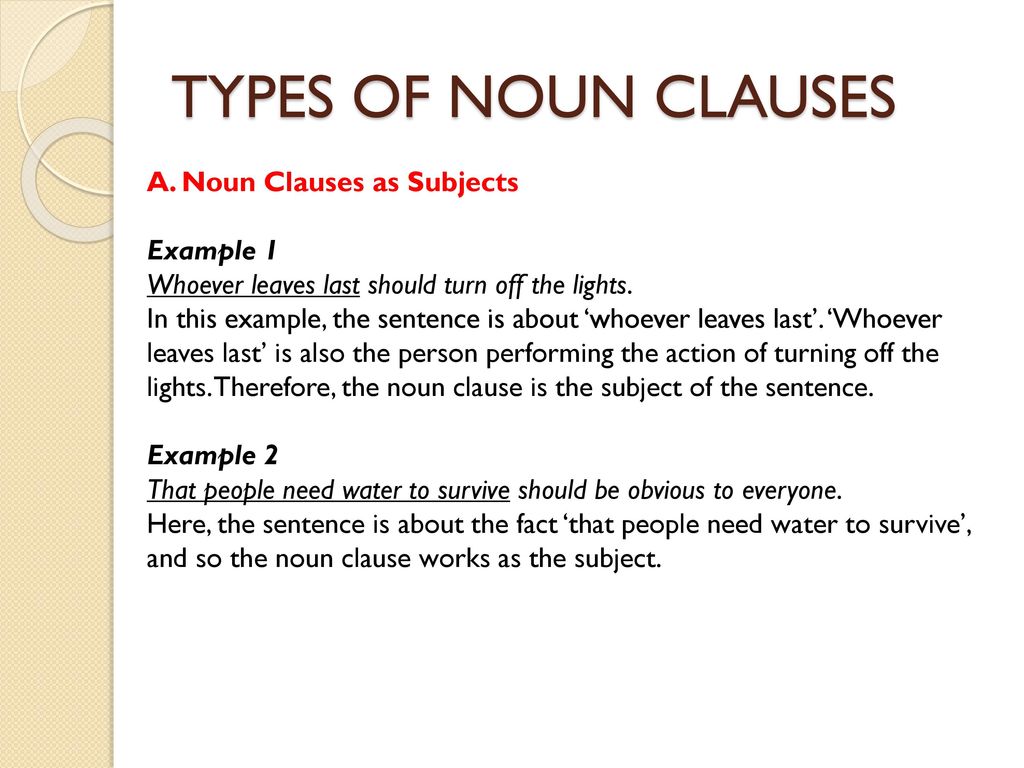
Noun Clause Ppt Download from slideplayer.com Some examples of nouns include, man, house, and car. The bag that someone left on the bus belongs to mrs. Noun clauses often use words such as. However, what you said yesterday cannot stand alone and therefore must be paired with an independent clause. In the sentence above, the direct object of the verb chose is the infinitive phrase to photograph. I don't know where he came from. Therefore, the noun clause is the subject of the sentence. I like what i see.
You must choose which flavor of ice cream you want.
A noun clause takes the place of a noun in the sentence. This means that the noun clause cannot stand by itself. All sentences, then, are clauses, but not all clauses are sentences. These are examples of nominal clauses (sometimes called 'noun clauses'): i know that the students studied their assignment. It can be used as the subject, direct object, indirect object, object of a preposition, subject complement, or appositive. ☑️ noun clause (as subject) + linking verb + adjective that he will accept the job — noun clause that + sub + transitive verb + object 2. For example (noun clauses shaded): What the boy told is the dependent clause. A noun clause is a dependent (or subordinate clause) that works as a noun. I don't know where he came from. Examples of noun clauses as the subject: In the sentences above, each dependent noun clause acts as the object of the sentence. She chose to photograph whomever was willing to pose for her.;